Why follow the turning of the year?
Join me as we celebrate the changing seasons
BLOG POST
3/22/20265 min read
I am excited to start my blog, Girl for All Seasons, where I plan to share my love of making the most of each season, savouring what is unique to each season and to each month. We can often feel that we live Groundhog Day — another day, another dollar. Well, savouring the seasons can be an antidote to that. Noticing a snowdrop in January, the longer days in February, enjoying swathes of daffodils in March and clouds of blossom in April — you get the picture.
We already mark certain days throughout the year — current Christian holy days, many of which coincided with — and in some cases absorbed — older seasonal rites marking the turning of the year, the obvious being Christmas and Easter. (I know, I know, it’s not as simple as that! I’m not planning to get into any debates about Church practice here. This is just about the joy and the uplift!) Anyway, there is more where that came from if you look for it. Whilst you might think that recurring seasonal themes and celebrations are also a form of Groundhog Day, being repetitive, you do have to wait a year for them to come around — and you cannot deny there is far more joy to be had in these moments than the habitual métro, bulot, dodo. Even the French can’t make the rat race sound enticing!
So here we are, kicking off with the Spring, or Vernal, equinox (equal night), which in bygone times, in some parts, used to be the start of the year. Whilst January 1st is the global standard for New Year's Day, there are various cultures around the world that celebrate New Year at springtime. Imagine that — starting anew just as nature is waking from its winter slumber and gifting us more light, more energy. I find it fascinating that until 1752, when England adopted the Gregorian calendar, Lady Day — 25 March, marking the Feast of the Annunciation — was the official start of the legal New Year. Once the Gregorian calendar was adopted, New Year’s Day became good old 1 January, deep in midwinter. Great idea: let’s have a complete reset when we’re in deep hibernation mode! Like starting your day at 3am in the morning! Which some people have to do, I grant you.
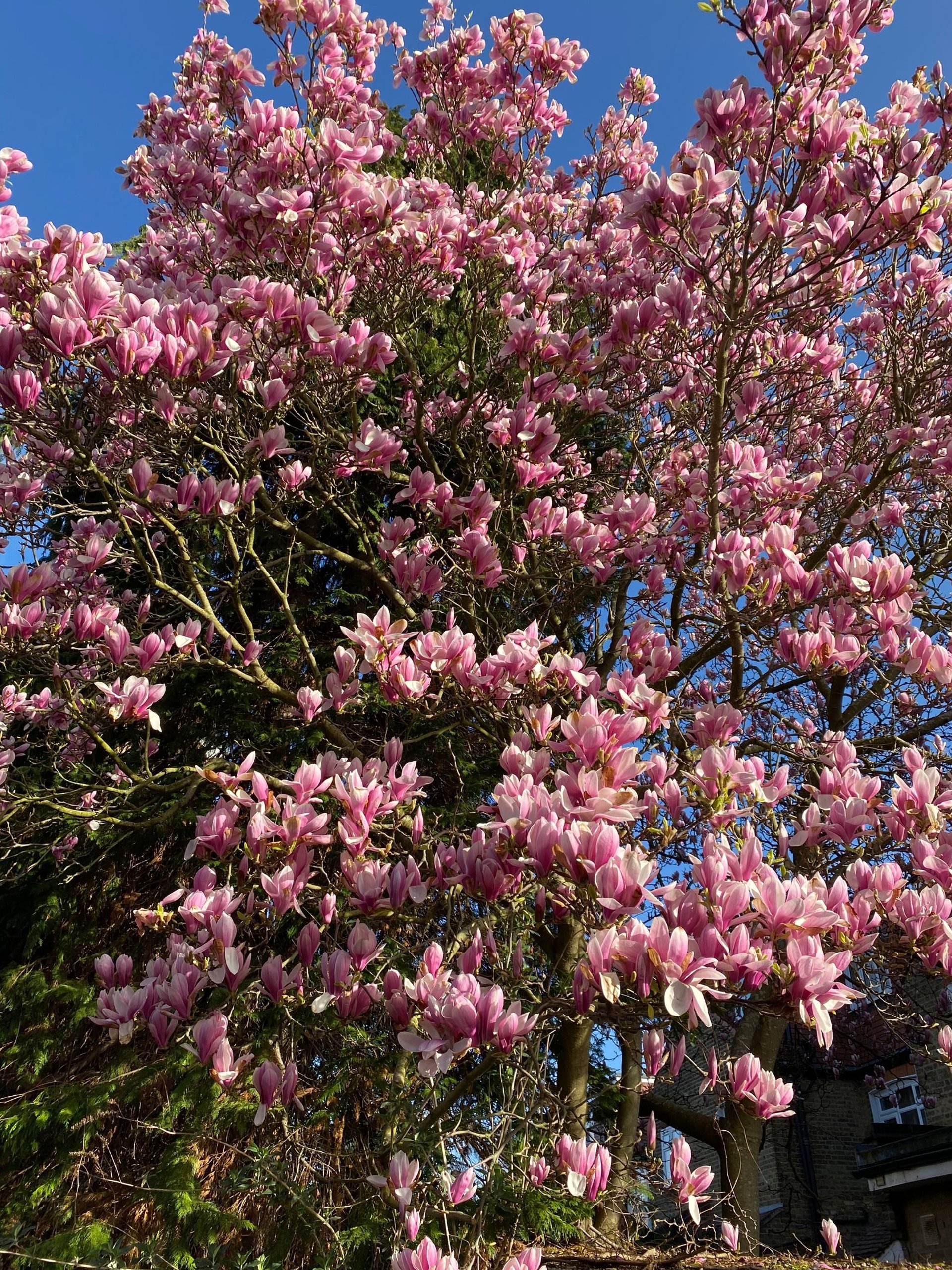
March finds me revelling in daffodils, and I start sowing seeds. The key March event for me is being on Magnolia Watch. I’ve always loved them and always notice them. They seem to thrive in London — there is a particularly beautiful pair on the Strand, flanking St Mary le Strand Church, if you happen to be going that way. It used to be that I wouldn’t notice them from one day to the next, and then suddenly I’d look up and there they all were! Now I am much more intentional. I don’t have a tree myself, but I know where to find them. By February, I notice the fattening buds, so it’s no surprise when the trees burst into flower with their ginormous, exotic-looking blooms. I am fascinated by how they put on such a display while we’re still scurrying around in our usual British wintry weather. Gorgeous. For more on where to track down magnolia trees in London, check out this sweet blog The Smell of Roses.
For me, this is also a time for fresher, lighter flavours after winter’s hearty soups, stews and casseroles. Nature is greening up, and I like to bring more green into my dishes and menus to match. Traditionally, this period was known as the 'hungry gap' — a lean stretch between the end of winter stores and the first spring harvests. Needless to say, in this day and age we don’t really suffer — and it’s not just exotic imports. We can buy almost anything at any time of year. That is another reason I love to follow the seasons: to ensure I eat what is in season as much as possible, focusing mainly on what we can grow here in the UK, whilst also enjoying the best of seasonal imports. There are health benefits — foods at their peak are fresher and often more nutrient-dense — and there are gourmet benefits too, in that they simply taste better. But truthfully, I just love doing it for fun. It makes life more interesting.
In the course of my blog posts, I shall be referring to my seasonal food heroes — the food writers who, unbeknownst to them, started me down this path through their books. I shall share their works and sometimes their beautiful, evocative seasonal descriptions. When it comes to March, this is what Nigel Slater writes in Appetite. "The low point of the cook's year, and I could almost scream at the mundaneness of it all." Oh dear! That's not good - I warned you it was the 'hungry gap'. However, he does go on to give lip-smacking recommendations for tropical fruit, purple sprouting, and mussels that "are fat and juicy". If you’ve not come across this book, I highly recommend it. It is absolutely wonderful as a cooking primer. I always want to buy it for young people leaving home — never mind the crappy student cookbooks — this will actually teach people how to cook. There are lots of wonderful recipes, but he also suggests seasonal alternatives: in spring, use rhubarb; in autumn, try damsons; and so on. At the beginning of the book are little paragraphs about each month. At the start of every month, I would read through and plan something Nigel had suggested.
I live in Greater London — it’s pretty urban! So I don’t grow my own, nor do I have access to hedgerows and fields to trip through and forage. However! I do what I can, and a March ritual that has become a little annual tradition is a nettle forage with my friend Lucy. We are in a book club together, but apart from that we only meet up for our yearly nettle gathering. We keep meaning to extend it to blackberries in the autumn, but we haven’t quite managed that yet. Still, I do love that marking of spring. People don’t really eat nettles these days, do they? There’s no need when you can buy everything from the supermarket. But once upon a time, nettles were often the first wild greens available after winter. You will find Samuel Pepys appreciating a nettle 'porridge' in his diary from 1661, on 25th February to exact. A bit early? Well, that was under the Julian calendar; according to the Gregorian calendar adopted 91 years later, that date would have been 7th March. I find nettles really tasty. You see them used in French and Italian cuisines — and as we know, they know what they’re doing. I like to make nettle tea, which couldn’t be simpler — just steeping a few young sprigs in hot water. You need gloves when harvesting and handling them raw, but boiling water neutralises the sting, so once they’re steeped, there’s nothing to worry about. If you’re cooking with them, a quick blanch does the trick. Why drink nettle tea? Just Google the benefits — they’re astonishing. Iron-rich, mineral-dense, and exactly the sort of green boost you might crave after winter. And I really love the taste — that herbaceous, slightly minerally flavour. I read it described as a blend of spinach and cucumber. I don’t disagree. It’s wonderfully refreshing.
I have used them to make soup and in a tart, but you could also use them to flavour risottos, ravioli and in a Polish favourite, pierogi. In my Recipe section I give one for a nettle risotto, or if it makes it more palatable, let's call it Risotto alle Ortiche. I once had the most delicious serving of this in the beautifully elegant, and aptly named (for this blog post) restaurant SPRING, founded by another food hero of mine, the wonderful, but now sadly departed, Skye Gyngell. The restaurant is worth a visit for a treat. Just checking out their menus online offers a good bit of inspiration into what's in season.
I am lucky enough to live near a superb London Farmers' Market. Mine is in Twickenham, but there are a number around the capital. If they sell it, it must be in season!
Another great resource to help you be seasonal is Eat the Seasons. l used to refer to this a lot.
For more on foraging, check out Charnwood Foraging Joanna is exceptionally knowledgeable. I did one of her courses once. It was very enjoyable and she uncovered so many edibles during the walk. She is based in Leicestershire.
Enjoy the Spring equinox, the lengthening days and the fresh energy. From this point in the year, things can only get better!
