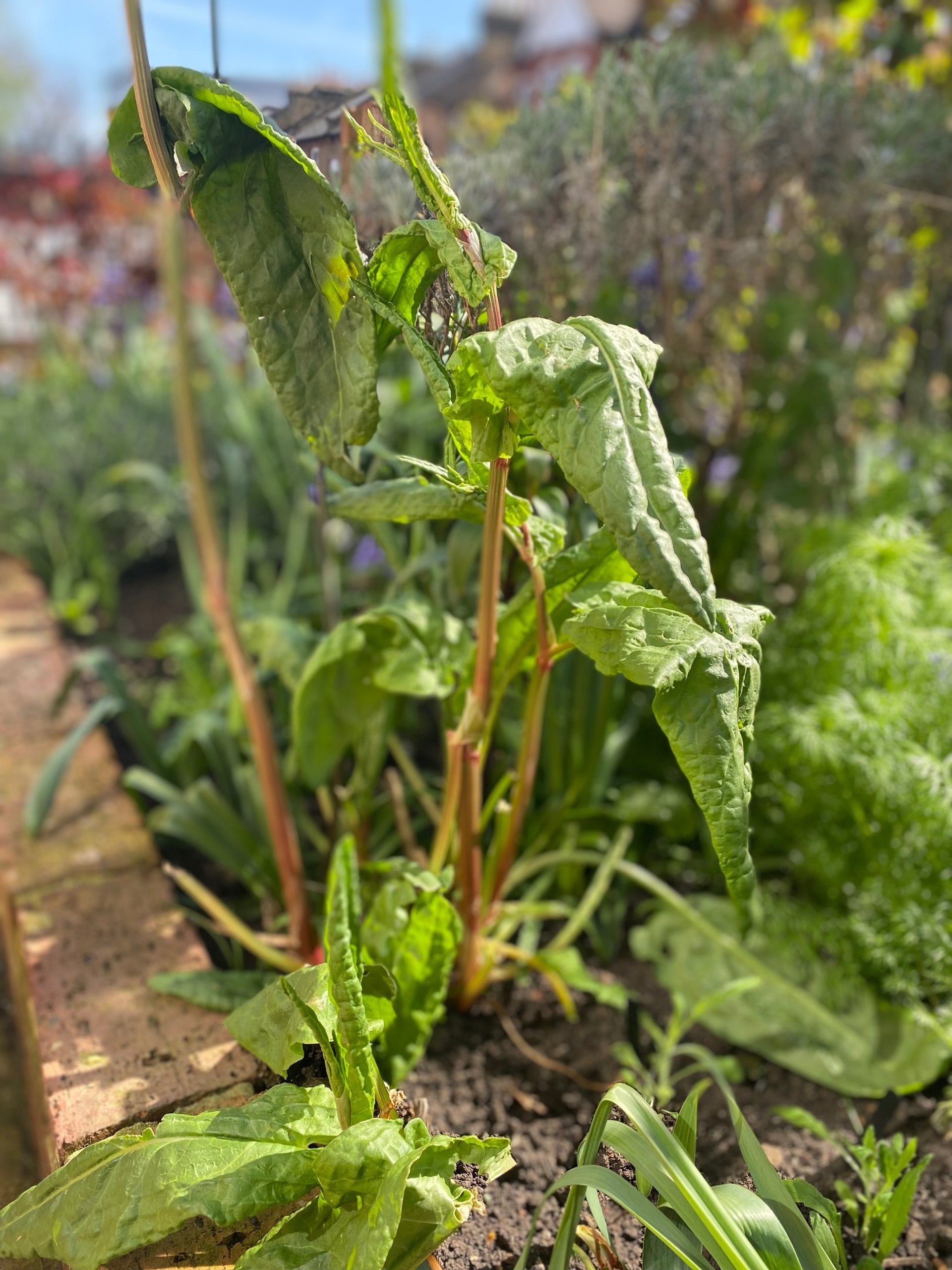
Sorrel!
BLOG POST
4/25/20262 min read
I thought I’d shine a spotlight on this spring leafy green. Sorrel actually grows for much of the year—from spring through to autumn—but it’s most often celebrated as a spring vegetable. Like nettles, it’s one of the first greens to appear after winter. Back in the days before supermarkets stocked everything year-round, this would have been a very welcome sight.
You’re unlikely to find sorrel in most supermarkets. You might spot it at a farmers’ market, but failing that, it’s incredibly easy to grow your own. It doesn’t need much space—mine grows happily in a 5 x 1 metre bed in my front garden. It’s very hardy and has been going strong for years.
So why bother? Its flavour is perfect for spring: vibrant, tangy, and lemony—uplifting and full of zing. I originally planted mine for heritage reasons. Sorrel soup is a Polish classic, and I longed for my mum’s sorrel soup. It’s never been widely available in the UK, so much so that I grew up not even knowing the English word for it! I knew it as szczaw (pronounced “shchaff”), and at home we ate szczawiowa zupa—sorrel soup. It was only later that I discovered its English name.
I love using sorrel in spring dishes. I make soup, of course, but also a sauce that pairs beautifully with chicken, salmon, or trout. Those familiar with French cuisine might recognise saumon à l’oseille—salmon with sorrel sauce. I use a similar sauce to bind chicken for a pie filling, and I also make one of my favourite tarts: sorrel and red onion.
I first discovered that tart in the Greens Cookbook, from the landmark vegetarian restaurant Greens in San Francisco. Established in 1979 and still going strong, it’s a place I’ve never visited but have long admired through its recipes. My copy—by Deborah Madison, first published in 1987—is something of an iconic tome, still in print thanks to Grub Street. I wouldn’t call it my greatest culinary influence, but I’ve cooked from it often and always enjoyed it.
I’ve included my own adaptation of the sorrel and red onion tart in the recipes. It’s delicious served hot as a starter with a dressed salad, or as a vegetarian main. It’s equally divine cold the next day—perfect for lunch or a spring picnic, if that’s your thing. It was my go-to dish for my kids’ school May Fair when they were little.
Your sorrel plant will keep producing throughout the summer, and often produces fresh, tender leaves again in cooler autumn weather, when I find myself reaching for it again.
Enjoy!
